Acrylic (PMMA) Extrusion Profiles for Lighting: What to Expect
Abstract: Acrylic is the default answer when the brief says maximum light out and long-term colour stability, and it is the wrong answer whenever the profile has to survive an impact, a solvent, or a hot enclosed driver compartment. This page sets out what extruded PMMA actually delivers in a luminaire — transmission, UV behaviour, machining, and the failure modes that show up when acrylic is specified into a job that needed polycarbonate — then lists the six lines a drawing needs before an acrylic section can be quoted properly.
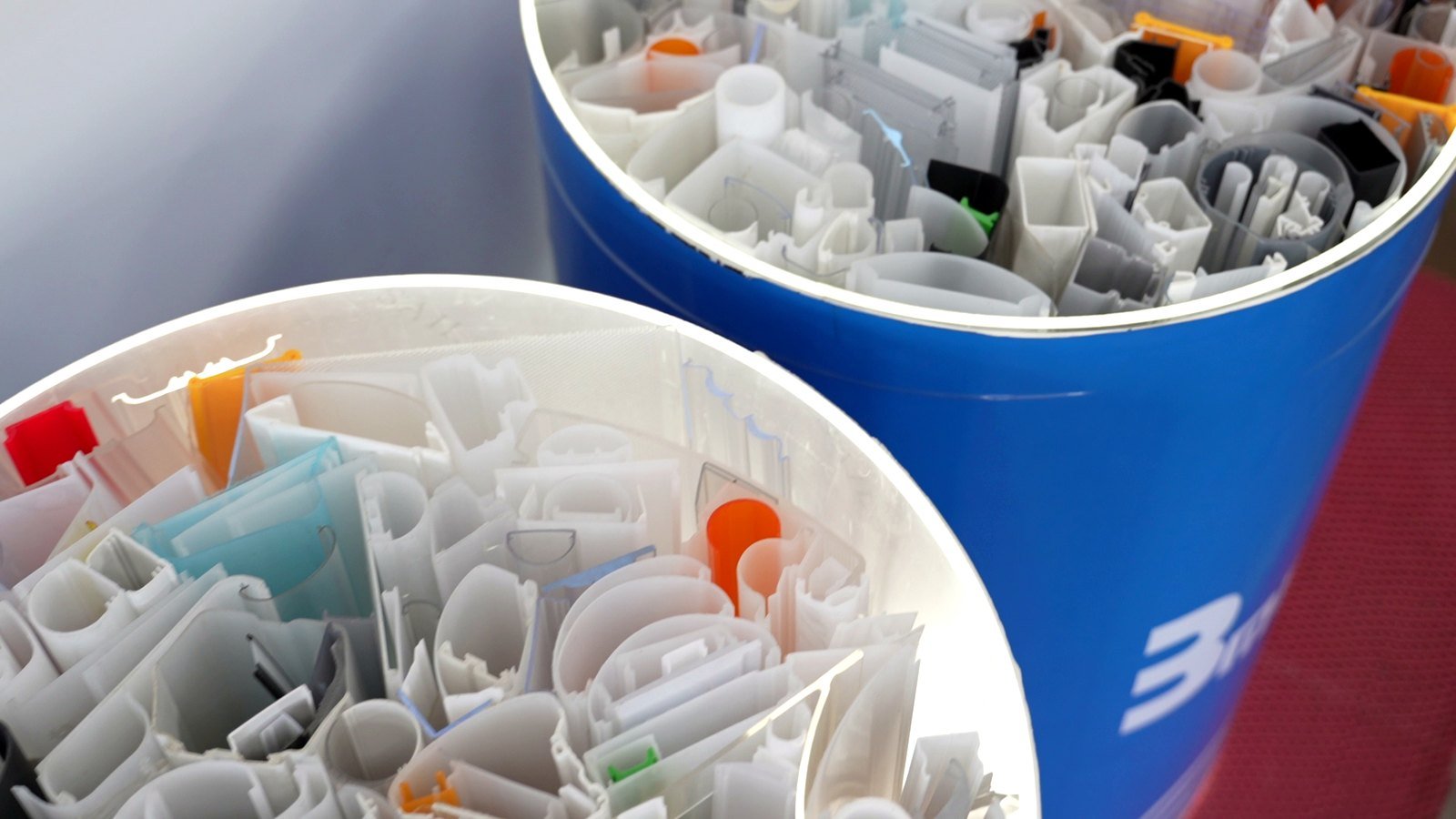
Where acrylic wins, and where it does not
The choice between PMMA and PC is not a preference, it is a list of exposures. Put them side by side against the actual service conditions and the answer is usually obvious.
| Condition in service | Acrylic (PMMA) | Polycarbonate |
|---|---|---|
| Light transmission of the clear grade | The highest of the two; the usual reason to specify it | Slightly lower in clear form |
| Long-term colour stability under UV | Strong; this is why outdoor signage and daylight-exposed diffusers are often PMMA | Needs a UV-stabilised grade and a specified wall to behave |
| Impact and vandal resistance | Brittle by comparison; not the choice for exposed or accessible locations | The reason PC exists in lighting at all |
| Heat near the driver or a high-power board | Lower softening point; needs clearance in enclosed fixtures | Higher continuous-use temperature |
| Contact with solvents, adhesives, cleaning agents | Stress-cracking risk; the chemical list matters as much as the drawing | More tolerant, but also not immune |
| Secondary machining and fabrication | Cuts, drills and polishes cleanly | Machinable, but more care needed to avoid stress marks |
Our own capability boundary is not material-specific in the way buyers often expect: we extrude both, over a transmission range that runs roughly from opaque to about 97 % depending on the diffuser construction and pigment load, in 100+ standard colours matched to RAL or Pantone. What changes between PMMA and PC is not what we can make — it is which service conditions the finished profile will survive.
Four ways an acrylic specification goes wrong
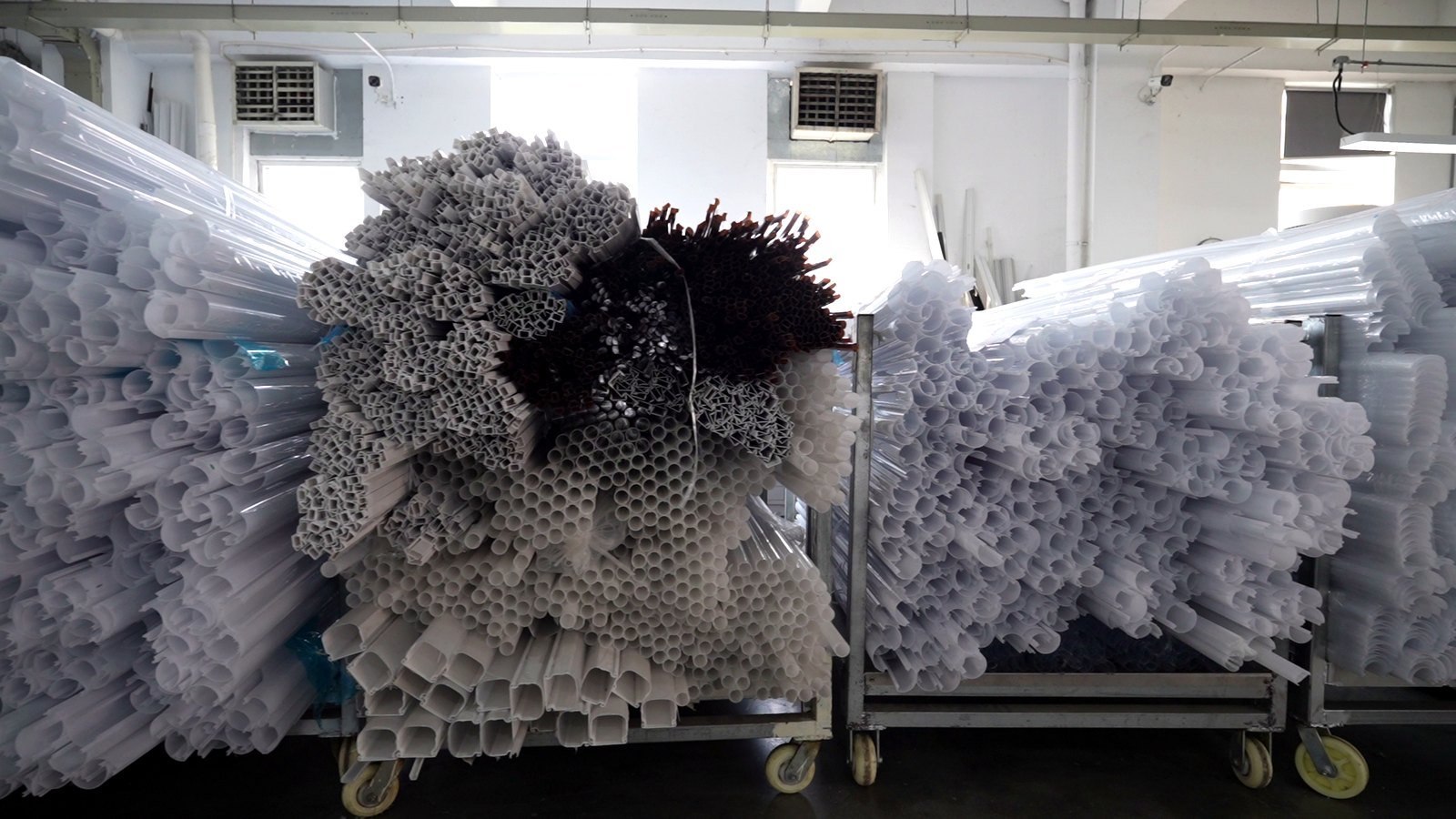
What acrylic asks of the extrusion line
Acrylic is not difficult to extrude, but it is less forgiving than polycarbonate in three specific places, and all three show up on the first article rather than in the quote.
- It is hygroscopic. Granules pick up moisture in storage, and moisture in the melt shows as surface haze or voids in the finished section. Drying before extrusion is not a preference, it is a process step — and it is one of the things worth asking a supplier about directly.
- The processing window is narrower. Melt temperature and residence time matter more, and the difference between a clean gloss surface and a marked one can be a small change in the cooling profile. This is why a first-article sample is not a formality on an acrylic section.
- Shrinkage interacts with snap features. Acrylic shrinks differently from PC, so a snap-fit geometry that was tuned on a polycarbonate prototype will not necessarily clip the same way in acrylic. If the section has to engage with an existing housing, say so on the drawing and send the mating part.
Co-extrusion is available where the brief needs two materials in one section — a rigid body with a flexible lip, for example, or a clear body with an opaque light-block. It changes the die and the trial plan, so it belongs in the first conversation rather than the second.
Reading two acrylic quotes for the same drawing
When two suppliers quote the same acrylic section and the numbers do not match, the cause is almost always one of four things:
- Different grade. An optical grade, a UV-stabilised grade and a general-purpose grade are three different prices for the same drawing.
- Different tolerance interpretation. A drawing that does not mark which dimensions are functional leaves each supplier free to assume a different precision level. We work to ±0.1 mm on marked critical die dimensions; everything else follows the general tolerance note.
- Different scope. One quote covers the die and the calibrator; another covers the die and bills trial runs separately.
- Different colour route. A standard colour from the existing library and a custom match are not the same work, and a custom match also needs a reference and an agreed measurement method.
What to put on the drawing
- Material and grade intent — PMMA, and whether UV-stabilised, impact-modified or a specific optical grade is required.
- Transmission target as a range, not a single number, plus the measurement method if it matters.
- Wall thickness at the thinnest point — thin corners are where cracking starts and where optical consistency is hardest to hold.
- The chemical list: adhesives, gaskets, printing inks and cleaning agents the profile will meet in assembly and in service.
- Service temperature and mounting clearance if the profile sits near a driver or a high-power board.
- Colour and finish — a RAL or Pantone reference, and whether the finish is gloss, satin or a diffusing surface.
How an acrylic programme actually runs
The sequence is the same one we use for every custom section: drawing review, die design and manufacture, first-article samples with measurement, then production after approval — roughly six weeks from an approved drawing to first production parts on a new section. Minimum order quantity is 500 units. On a repeat section the die already exists, so the sample stage shortens and the first-article date moves accordingly.
Related reading: PMMA as a lighting material, the PC vs PMMA selection matrix, why diffusers yellow, and thermal limits of PC and PMMA. Ready to compare sections? send the drawing.