Extrusion Tooling Cost: What You Actually Pay For
Abstract: A tooling quote is not one number, it is four: die design, die steel and machining, trial material, and the maintenance reserve you will draw on for years. Buyers who treat it as a single price usually discover in year two that they do not own the die they paid for. This page breaks the quote into its parts, explains why two suppliers quoting the same section can differ by a factor, and lists the five variables that actually move the figure. We do not publish list prices, because a tooling cost without a section attached is a fictional number.
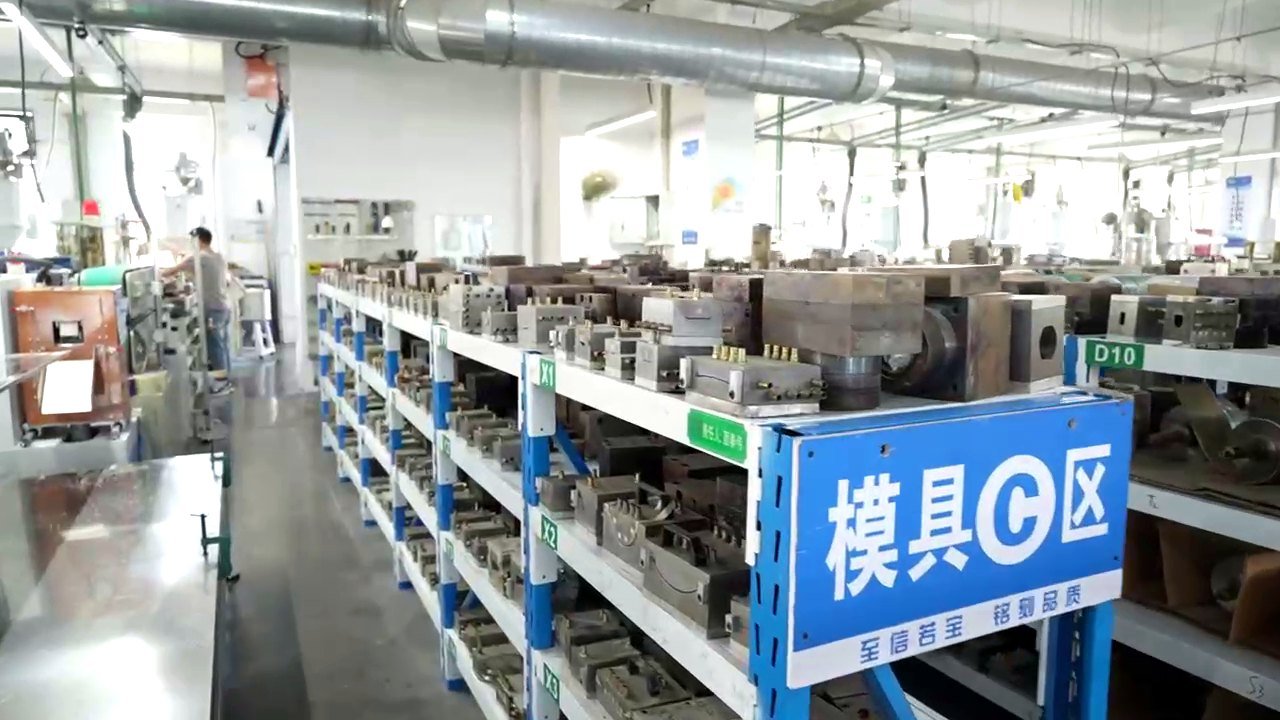
What the number is made of
A tooling charge covers four things. Suppliers bundle them differently, which is the first reason quotes are hard to compare.
| Component | What it pays for | Roughly how it scales |
|---|---|---|
| Die design | Section analysis, flow balancing, land length, calibrator concept. Usually a few days of a toolmaker’s time. | With section complexity, not with order quantity |
| Die steel and machining | Hobbing or EDM, polishing of the flow surfaces, hardening, fitting to the extruder head. | With die size and how many separate plates the section needs |
| Trial material and machine time | Setup scrap, first-off runs, dimensional and optical measurement, correction passes. | With how far the first article is from the drawing |
| Maintenance reserve | Pull, clean, re-polish and re-fit after wear. Either charged per event or carried in the piece price. | With metres run and with how tight the tolerances are |
The fourth line is the one buyers forget. A die does not stay at its first-article condition. Every metre of haul-off wears the land and the calibrator, and a section held to tight limits needs reconditioning more often than a loose one. Whether that cost sits in the tooling line or inside the unit price is a commercial choice, not a technical one — but it exists either way, and a quote that omits it will recover it somewhere else.
Why two quotes for the same section differ
Send one drawing to three suppliers and you can get three numbers that share no common basis. That is not necessarily dishonesty. It is usually one of these:
- Different scope. One quote includes the calibrator and the first-off inspection report; another covers the die only and bills trial runs separately.
- Different die construction. A single-plate die and a multi-plate die with a separate calibrator solve the same section with very different amounts of machining.
- Different ownership terms. Some suppliers amortise the die into the piece price and retain it. The number looks lower because you are renting, not buying.
- Different tolerance interpretation. A drawing marked “±0.5 mm unless stated” with no critical dimensions flagged lets each supplier assume a different precision level — and precision is the main driver of tooling effort.
Who owns the die, and why it matters at year three
This clause is worth more than the price difference between suppliers. Three arrangements exist:
Customer-owned
The die is invoiced to you and remains your property. You can move it to another extruder. You also carry storage and maintenance of an asset you cannot use yourself.
Supplier-owned, amortised
The tooling charge is spread across the first orders. Piece price stays lower while the volume runs. If you stop ordering, you own nothing.
Supplier-owned, charged once
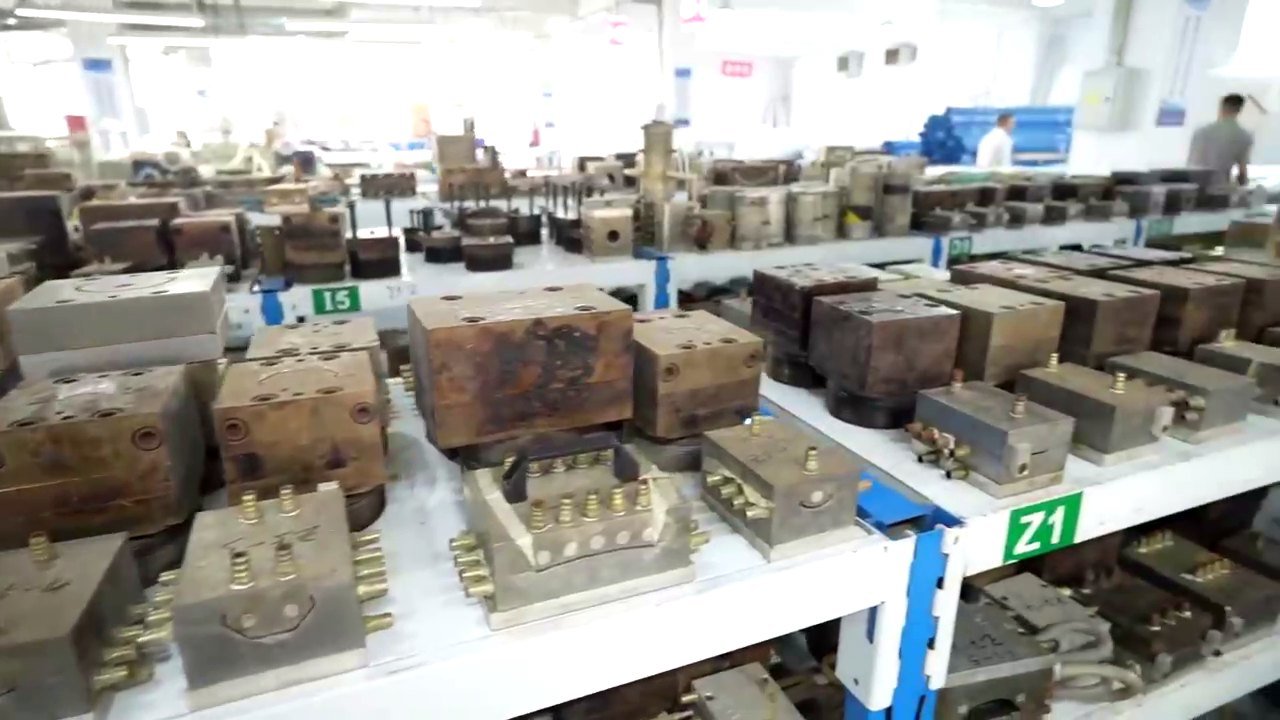
You pay the tooling line at the start, the die stays in the supplier’s store, and re-orders for the life of the section carry no second tooling charge. This is the arrangement most of our repeat sections run on.
The question to ask is not “who owns it” but “what happens on a repeat order in three years, and what happens if I want to move”. A supplier that cannot answer both in one sentence has not thought about it.
The five variables that move the figure
| Variable | Direction | Why |
|---|---|---|
| Section complexity | Up sharply with internal ribs, closed hollows and undercuts | Each feature needs its own flow path and its own polishing access |
| Wall thickness uniformity | Up when walls vary by more than about 2:1 | Thick and thin sections cool at different rates; the die has to compensate |
| Number of marked critical dimensions | Up per dimension | Each one adds trial iterations and inspection |
| Material | PMMA tends to cost more than PC in trial | Narrower processing window, more setup scrap before the section stabilises |
| Optical requirement | Up when prism pitch or haze is specified to a number | The die has to be measured optically, not just dimensionally |
Notice what is not on that list: order quantity. Tooling cost is close to independent of how many metres you will eventually buy. That is why a 500 m trial order and a 50,000 m programme can carry the same tooling line — and why the tooling charge per metre looks alarming on the small order and invisible on the large one.
What we need to quote it
Four items. With all four we can give a tooling figure and a first-article date. With fewer, any number is provisional.
- A dimensioned section — PDF, DWG or DXF. A photograph of an existing part is workable only if we can also measure it.
- Material and colour — PC or PMMA, and whether the colour is a RAL or Pantone reference or a physical sample.
- The marked critical dimensions — the ones that decide whether the part assembles.
- Annual or first-order volume — not to price the tooling, but to advise whether the die should be built singly or as a multi-strand tool.
Where the cost conversation goes wrong
Comparing a bundled quote with an unbundled one
One number includes trial runs and inspection; the other does not. The gap is not margin, it is scope. Ask for the four components separately on every quote you compare.
Assuming a cheaper die is a cheaper project
A lightly built die that needs re-polishing every few thousand metres costs more over two years than a heavier one, and it interrupts deliveries while it is out of the press.
Paying tooling before the first article is approved
Agree what “approved” means in writing — which dimensions, which optical values — before the tooling invoice. Otherwise the definition of done drifts with each correction pass.
Forgetting the drawing is part of the tooling
An ambiguous drawing is resolved in the die, and the die is expensive to change. Two hours tightening the section before the die is cut is the cheapest engineering in the project.
Frequently asked questions
Is tooling charged again for a repeat order?
No, provided the die is still in the store and the section has not changed. A repeat order for an existing section re-enters production, not tooling. If the section is modified — even a wall thickness change — the die usually needs rework and that is charged.
Can the tooling be amortised into the piece price?
Yes, and for large programmes it often should be. The trade-off is that the piece price then carries the tooling, so a reduced or cancelled volume leaves the tooling partly unpaid and usually triggers a true-up clause. Ask for both structures and compare total cost at your realistic volume, not at the volume in the business case.
How long does tooling take before I see a first article?
For a section within our normal range we plan on roughly six weeks from approved drawing to production-ready, with the first article inside that window. Highly complex sections, or ones needing optical measurement against a UGR or haze target, run longer. We confirm the date against the specific section rather than quoting a blanket lead time.
Do I need to order the full MOQ to justify tooling?
The minimum order is 500 m, and it applies to the run, not to the tooling decision. A first order at the minimum is a normal way to prove the section in a real luminaire before committing to a programme.
Send us the section
Send a dimensioned drawing or a sample you can measure, tell us PC or PMMA and the marked critical dimensions, and we will come back with the four-part tooling structure and a first-article date. Request a quote, or read how our tooling shop works first.