Lighting Extrusion Profiles

PC and PMMA lighting profiles for LED luminaire manufacturers – diffusers, lenses, light covers, tubes and housings, extruded to your drawing or sample.

Product Range

Every profile below is a lighting component. Start from the type you need, or send us a drawing and we will develop the section for you.

Product Types

Browse by Category
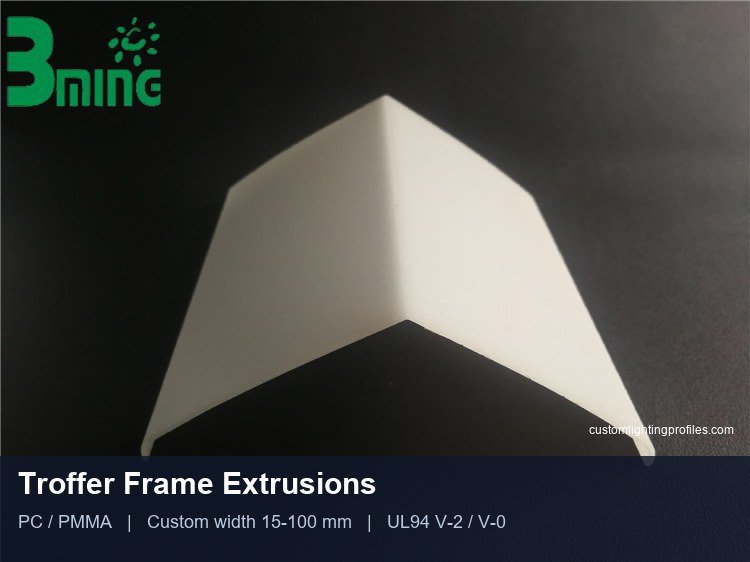
Troffer Frame Extrusions

Custom Lighting Profiles

Extrusion profiles developed from your drawing, sample or CAD file - engineered as a lighting component, not a...

Also specified as: Troffer Frame Extrusions

View →
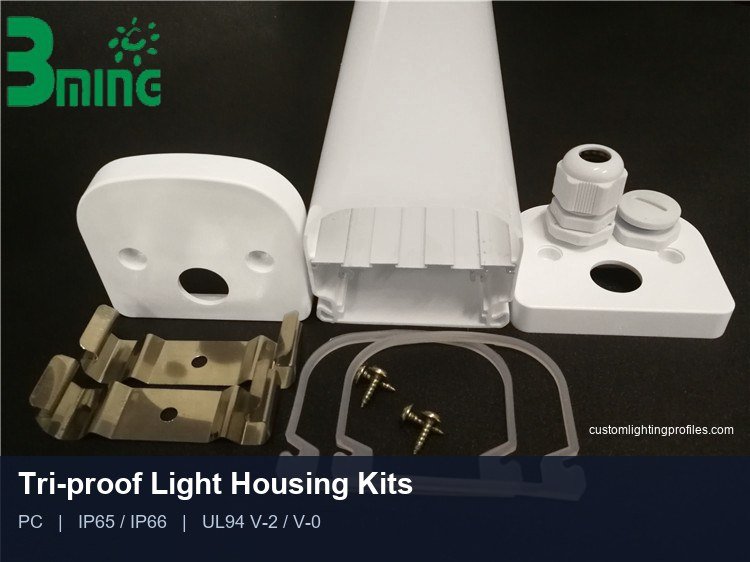
Tri-proof Light Housing Kits

Custom LED Profiles

Extruded profiles for LED linear, strip and modular luminaires - diffusers, housings and covers designed aroun...

Also specified as: Tri-proof Light Housing Kits

View →

PC Lighting Profiles

Polycarbonate lighting extrusion profiles for covers, housings and fittings where impact strength and heat res...

View →

PMMA Lighting Profiles

Acrylic (PMMA) lighting extrusion profiles chosen for light transmission, colour stability and the fine surfac...

View →

Linear Light Profiles

Continuous extruded sections for linear luminaires - runs, coves, suspended systems and architectural lines, c...

View →
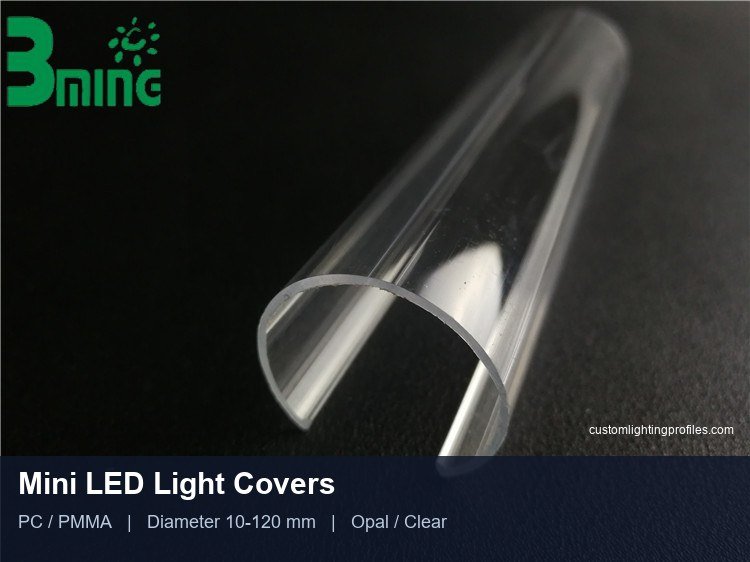
Mini LED Light Covers

PC Light Covers

Polycarbonate light covers extruded for fittings that have to survive impact - industrial luminaires, tri-proo...

Also specified as: Mini LED Light Covers

View →

PMMA Light Covers

Acrylic light covers with high transmission and long-term colour stability - for decorative, architectural and...

View →
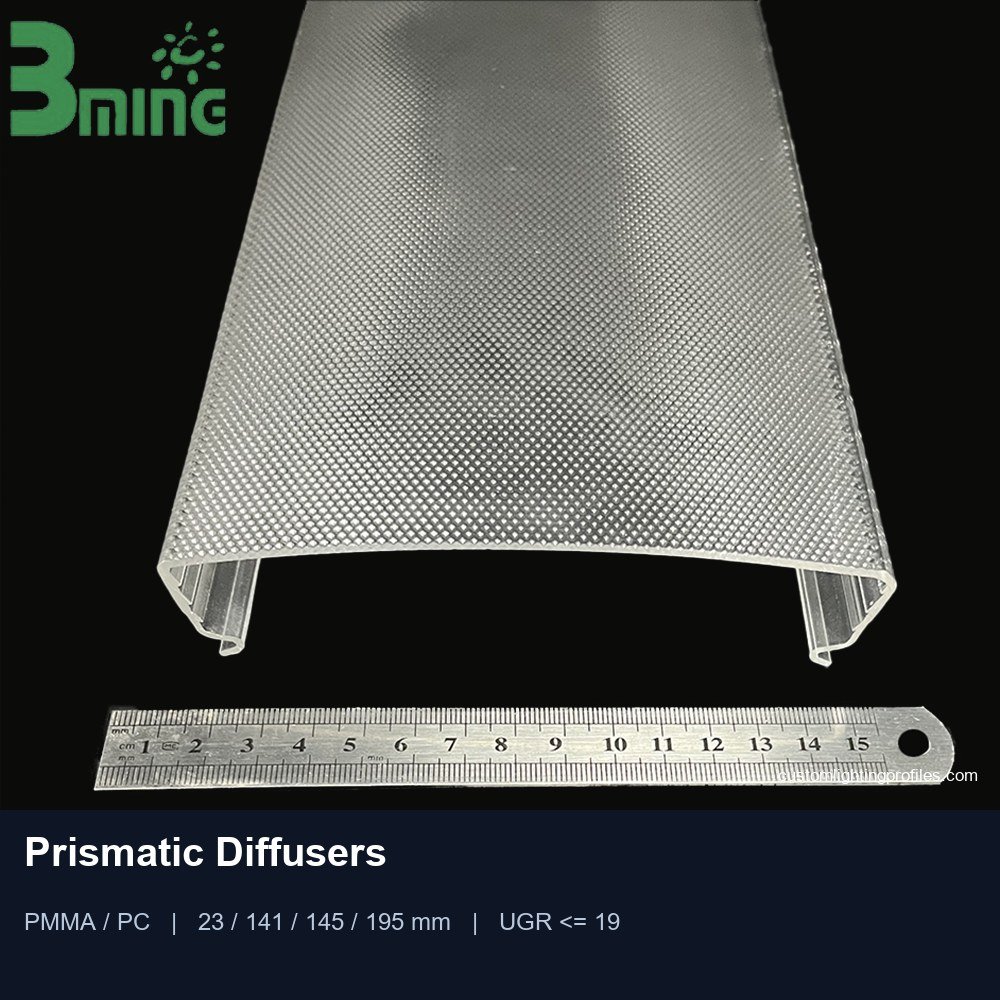
Prismatic Diffusers

Optical Lighting Profiles

Extruded sections engineered for what the light does - diffusion, beam shaping and glare control - rather than...

Also specified as: Prismatic Diffusers

View →
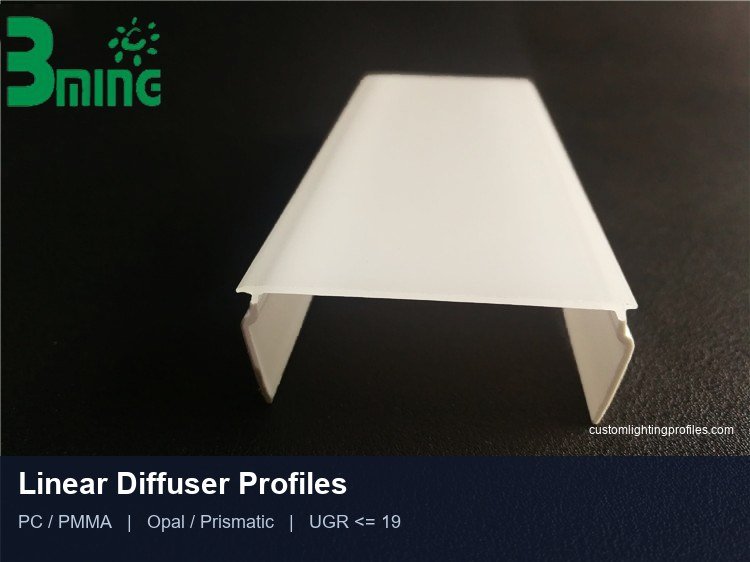
Linear Diffuser Profiles

Custom LED Diffuser Profiles

Diffuser sections tuned to hide LED pitch at a defined transmittance - frosted, opal, matte or prismatic, extr...

Also specified as: Linear Diffuser Profiles

View →
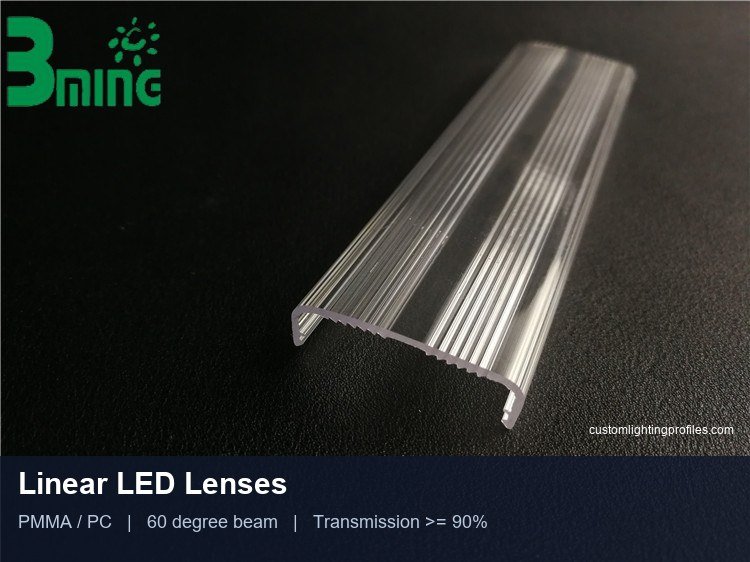
Linear LED Lenses

Custom LED Lenses

Extruded linear lens profiles that shape the beam without secondary optics - for linear, architectural and ind...

Also specified as: Linear LED Lenses

View →
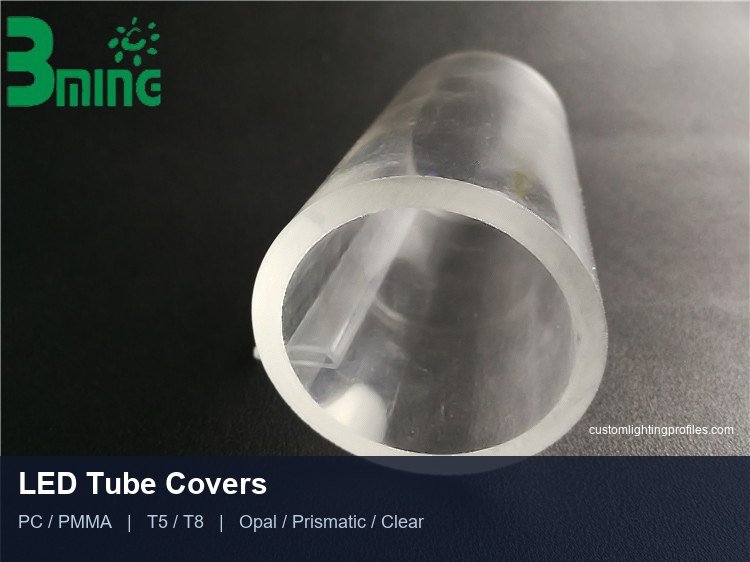
LED Tube Covers

Lighting Tubes

PC and PMMA tubes and tube profiles for LED tube luminaires, linear fixtures and protective sleeves - extruded...

Also specified as: LED Tube Covers

View →

PC LED Diffuser Profiles

Polycarbonate diffuser sections for LED luminaires that also have to survive impact - the optical performance ...

View →

What we work to

Capability envelope - every profile on this site
MaterialPC or PMMA, single extrusion or co-extruded
Section widthup to 400 mm across the profile
Critical die dimensions±0.1 mm on the dimensions that carry the fit
Wall thicknessquoted against your drawing - optical walls and heavy housings both run
Transmittance0-97%, tuned to the role of the face
Surfaceclear, matte, frosted, embossed or prismatic
Colour100+ shades matched to RAL or Pantone
Minimum orderfrom 500 pcs per profile
Sample to mass productionaround 6 weeks, tooling included

One line, one envelope. The categories below are ways buyers describe the same process – a profile is quoted from a drawing or a sample, not picked from this page.

How to choose which profile family you are asking for

These categories overlap on purpose, because buyers search for the same part under different names. A “linear diffuser profile”, a “custom LED diffuser profile” and a “PC LED diffuser profile” can all describe one section. What matters is not which page you start from, but which three questions get answered before you ask for a price.

The first question is material: PC or PMMA. PC is chosen for impact, heat and flame rating; PMMA for transmission, colour stability and fine optical geometry. Where both matter, co-extrusion puts a PMMA optical face on a PC structural body in one pass.

The second is the job the profile does. A housing carries load and heat, a cover carries light, and a trim exists to close the assembly. Different jobs, different tolerance callouts, different tooling budget.

The third is the environment. Indoor office, outdoor facade, factory with a cleaning regime, or transport interior with a flame specification – the environment settles material and grade faster than any optical argument. State it in the enquiry and the rest of the conversation shortens.

What to put on the drawing

  • Section at 1:1, with wall thickness dimensioned separately
  • Material, or the environment if the material is not decided
  • Transmittance target as a number at the running wall thickness
  • The fit features that have to hold across the whole run
  • Colour reference – RAL, Pantone or a physical chip
  • Cut length, packing and annual volume

Where profile selection goes wrong

Four mistakes account for most of the profiles that get re-specified, and all four are made before the enquiry is sent.

Material chosen on habit

The material that worked on the last project is not automatically right for this one. Impact, heat and compliance requirements decide it.

Optical target written as a colour word

"Opal" spans a wide transmission range. Without a number, approval becomes a matter of opinion.

Environment left out of the enquiry

Outdoor exposure, cleaning agents and flame requirements all change the grade. Leaving them out means the selection is made on optics alone.

Tolerance applied where it does no work

A blanket tight tolerance slows the line and the tooling. Mark the features that carry the fit and let the rest run.

None of these show up on a datasheet. They show up at first-off approval and in the field, which is why we review the section before quoting it.

Questions we get asked

Are these stock profiles?

No. Every profile on this site is made to a drawing or a sample, including the ones used as examples. Stock would mean somebody else decided your optics.

Which material should I choose?

PC for impact, heat and flame rating; PMMA for transmission and colour stability. Co-extrusion covers both at once.

What width can you extrude?

Up to 400 mm across the section, with ±0.1 mm held on the dimensions that carry the fit.

What is the minimum order and lead time?

From 500 pcs per profile, around six weeks from drawing to production including tooling.

How a custom profile is developed

  1. Drawing review – section, tolerances and optical targets checked for extrudability
  2. Profile engineering – wall thickness and radii balanced for stable extrusion
  3. Material selection – PC, PMMA, co-extrusion or a specified compound
  4. Tooling design – extrusion die designed for your section
  5. Mould manufacturing – die and calibration tooling machined
  6. Prototype – first-off sections for your approval
  7. Extrusion – production run on a matched line
  8. Cutting – cut, drilled or machined to your drawing
  9. Inspection – dimension, appearance and optical checks
  10. Packaging – protective film, bundles and cartons to your specification

Send us your drawing or sample

Our engineers review geometry, material and tooling feasibility and come back with a profile proposal and quotation.
Scroll to Top